Dungeons, not usually the dinky prisons beneath castles that most people think of when they hear the word; but our own version of massive underworld fortress. We spend a lot of time exploring them and exterminating their denizens (and taking their stuff). Sometimes they are simply the lairs of evil creatures from which they raid human settlements, sometimes they are ancient ruined cities of the dwarves that have been overrun by the forces of evil*, sometimes they just are.
D is for Dragons. The ultimate arch-nemesis of the game, they sit on vast hoards of wealth for reasons only they can fathom. I like that EGG threw a bone to the far east with the invention of good dragons, but I can honestly say I have never used one that I recall, for any reason. I use dragons in my campaign as the objects of a great quest, and they are always evil. Blame it on the Hobbit (cartoon, then book) and the cover of my Holmes basic set; those two sources covered how I perceive dragon-kind more than anything else, and the supporting sources of Beowulf and Dragonslayer are pretty similar. When I DM I use them pretty sparingly, they are tough opponents that you meet at the end of a quest, over using them makes them commonplace and ruins the mystique.
Dungeons and Dragons is the name of the game after all.
D is for Dwarves. This is turning into a pretty Tolkien heavy post, Dwarves are always modeled after Tolkien in standard fantasy. We even changed the spelling of their plural from Dwarfs to Dwarves because of him. The Dwarves in the Hobbit and Gimli in the Lord of the Rings set the standard. They also are responsible for the majority of subterranean complexes in my Garnia campaign world. The only time I have ever seen them as different from the Tolkien paradigm was in my Roman themed campaign where they were the magical mutant male children of human families and considered the sons of the god Vulcan; and even there they kept some of their racial mythology as consummate craftsmen, particularly with metal.
D is Demons and Devils both, because they form the supernatural arm of the bad-guy leadership and some of their toughest shock troops. My Garnia campaign is very much oriented as a good versus evil conflict with a serious multi-planar invasion aspect. Demons and Devils are the invaders. The princes are super opponents that move largely behind the scenes and their underlings make great end boss leader types for lesser evil creatures. That said, in all my years of DMing, I have used them sparingly, like dragons familiarity breeds contempt.
D is for Dice, and man do we love our dice. We love our dice so much that we will seek out the coolest, prettiest or most unusual dice that we can find just so we can hoard them like dragons. I personally prefer my dice like my swords, simple and functional, but I appear to be largely alone on this stance. I implemented an anti-cheating measure back when I was in junior-high that said essentially that I need to be able to read your die from where I sit without any trouble. That cut down on the uninked (and uncrayoned) dice at my table and the later ones with all the decorative inking that makes them impossible to read.
Then we have our weird dice rituals and superstitions. No one may touch my dice. Everyone must touch my dice. Dice that behave poorly must be punished somehow. I have seen bad dice thrown across the room, put in a time out (in a separate box or in the freezer), and executed (crushed by a hammer or thrown in the fire) with or with out the other dice present as witnesses.
We also have our dice rolling procedures. Mine are less stringent than some, more than others. I require a reroll of all leaners, those dice not resting flat on the table for whatever reason and I force a reroll of dice that land on the floor. If miniatures are in use, you must not roll into the combat area where the miniatures are. Some people require the use of a dice cup or a dice tower, I just will expel obvious cheaters. Darryl C. used to have a cheating method of rolling multiple dice one after another so he could see if the first die was good and, if not, knock it to another face with his next die; so I had to make all rolls of multiple dice simultaneous. My son John also forced me to reiterate this rule when he decided it would be fun to roll his dice with great ceremony one at a time so it took forever to make a character.
D is for Delftwood, the SCA barony in which I live. My wife and I have been less active in the SCA for several years now, but we are trying to return to a more active status now that the kids are older. We used to be pretty involved there. I have served in the past in various official capacities. I was a deputy herald and a deputy knight marshal. I was the heavy weapons champion one year. I ran a second fighter practice in the north with my friend (and distant cousin) Kevin M. for about 5 years. We put on a regional fighter practice (and potluck picnic) every Memorial Day for 5 years running and I have autocratted several events. My wife also served as Chatelaine for a few years. We were even asked to run for Baron and Baroness once, but declined to. I love Delftwood and it's people, and I miss being more active there. Delftwood is also the home of Aethelmearc's first king, Sir Yngvar the dismal, who along with Sir Dain Ferris trained me as a fighter. Dain did most of the training, and he trained Yngvar, so I guess he deserves most of the credit :) I'd also like to give a shout out to Baron Rian who influenced my glaive style so greatly.
D is for Dad, specifically my dad, who was one of the first people to play D&D with me when I was a kid despite the fact that he is not a fan of the fantasy genre. He stuck it out and ran a party by himself through the Caves of Chaos while I learned to DM. He DMed games at my junior high D&D club. He bought me my AD&D Players Handbook and DMs Guide. He bought me a set of Grenadier D&D miniatures as a souvenir from his trip to California back in '82.
*Yeah, Moria. Professor Tolkien invented the megadungeon, deal with it.
Mongol Home

Tuesday, April 5, 2011


Monday, April 4, 2011
Ch is for-
A different way of using C and a bonus day for the A to Z challenge. I'll let you in on a little secret, C is my least favorite letter. C's usefulness came to an end when it was replaced by both S and K, the soft and the hard C sounds. In Latin there is no K, so a C represented that sound, and we use the Latin alphabet; so why did we invent the soft C that sounds like an S? I don't know, but I blame the French. I do know that the CH is C's only redeeming value in the English language.
So, CH is for Chivalry; the medieval European code of knighthood. Chivalry comes to us from French and the code of the Chevalier, which is French for knight, but really just means horseman. I have to say that if Conan the Barbarian was a major influence on me, so too was Arthurian legend and the bulk of Arthurian stuff is based on Mallory's Morte D'Arthur which features some pretty idealized knights; this is the other pole of my D&D love, the idealized middle ages. I have played Pendragon, although not as it was intended to be played, but I have always wanted a chivalric D&D game too. Other Chivalric influences on me were le Chanson de Roland, which I read an English translation of when I was in 7th grade; and John Boorman's masterpiece film Excalibur, which I saw in the theater when it came out with the friend that introduced me to D&D, Chris G.
Ch is for Chanbara. Chanbara is a genre of swashbucking samurai historical films from Japan. Kurosawa was famous for them. Watch some and an Oriental Adventures (or Ruins and Ronin, depending on your preferred Samurai action rules set) campaign will spring forth fully formed from your brow like Athena from Zeus.
Ch is for China. China is to east Asia as Rome is to western Europeans, except it never fell. All of the Japanese stuff that I love so much owes a lot of it's existence to Chinese culture. I never give the Chinese the credit that they deserve for being the fountainhead of east Asian culture probably because I find their culture to be smug. I have always felt the Chinese were expressing a kind of cultural superiority complex towards all other cultures, they are always going on about how ancient their civilization is. That rubs me the wrong way, probably the same way that all the Germanic tribes felt about Rome and it's empire. Anyway, that's my problem not China's and I have to admit they are responsible for some pretty sweet stuff; kung fu and the associated movies, Romance of the Three Kingdoms and Chinese food come immediately to mind.
Ch is for Chariots, which are just a damned cool way to travel around. Historically they were used by pretty much everyone that ever conquered a settled kingdom or empire from the dawn of history up into the iron age and the Roman raced them. In the Táin Bó Cúailnge Cú Chulainn, with just his driver, fights off the entire army from Connacht for nine days while riding around in his chariot challenging them to single combat at a river ford.
CH is for Charisma everyone's favorite dump stat. Charisma used to be more important in earlier editions when everyone needed henchmen and hirelings if they wanted to survive and WotC D&D made it necessary for Clerics and invented a spell-casting class that used it as it's prime requisite. Me, I always used wisdom as a dump stat when the opportunity arose.
Ch is for Chimera the lone CH monster in the 1st edition AD&D Monster Manual. I just wanted to include him for that reason. I also like that EGG would freely loot monsters from classical sources or anywhere else for that matter and make them excellent. I don't really stat monsters up that well or easily, so I greatly appreciate those that do and therefore save me the work.
Ch is for Chaos. Whether it's the evil chaos of the Caves of Chaos or my own Chaotic Good alignment preference, I like chaos. In early D&D chaos had the implication of evil, but I am a Holmes to AD&D guy, so I like the Good-Evil and Law-Chaos 9 fold alignment axis.
Ch is for Characters. In the modern world they probably would have been called avatars or personae or something. I like characters, it makes them more separate from the player, like an actor taking on a role. Considering the crap that RPGs went through in the early days about people being unable to distinguish between the game and real life I'd like to keep the distinction as clear cut as possible. This is probably because my parents always seemed to assume that because I liked fantasy that it somehow made me retarded. Yes mom, I know the stuff on Star Trek isn't real. No mom, I don't think my D&D character is actually me. Funny, they never asked me if I was confused about my real identity when I was acting in plays.
Ch is for Charging and charging hard. My characters in D&D are hard charging battle monkeys mostly and I am hard charging battle monkey in the SCA. I love to shatter a shield wall, what can I say? it's exhilarating. In D&D I often play berserker types. I think it helps me blow off steam and relieve stress. Oddly I am much more careful a planner when playing wargames, although I do love setting up a good cavalry charge to finish off an opponent!
Sunday, April 3, 2011
C is for-
Conan. I had to mention him again after he got mentioned in both of my previous alphabet entries. I don't have a whole lot more to say about him that I haven't already covered. He's a huge influence, etc. Read the Howard stories, read the comics and watch the Schwarzenegger movie; that stuff will bleed D&D inspiration all over you.
C is also for Celts. The Celts dominated Europe before the rise of Rome. Seriously, Celtic culture was everywhere from the western edge of the Black Sea to the Atlantic ocean, from the northern shore of the Mediterranean to the North Sea and the Baltic. All of central and western Europe were Celtic territory. Northern Italy, France, Spain, the Czech republic, Germany, Austria, Switzerland, the low countries and all of the British Isles. They are more of an ancestral "lost" civilization than the Romans are to anyone of central or western European descent. They are probably the first Europeans to work iron. They were conquerors and artisans. They beat the Greeks and sacked their holy sites, including Delphi where Apollo's oracle was, after which they planted a colony in what is now central Turkey; they were the Galatians of the bible. They beat the Romans and extracted tribute from them to quit their occupation of Rome. Seriously, that we are not communicating right now in a Celtic language is a result of them peaking too early and lacking in centralized government. Also, they scared the Romans. That caused the Romans to need to extinguish the Celtic culture as nearly as they could.
C is for D&D's Common Tongue, a language I have long had a love-hate relationship with. I can almost think of Common as simply the lingua franca of the D&D world, like English is today in our world, or French was for centuries previous to it, or Latin before that. The problem then with Common as a language is that there should still be local languages and dialects. If that is the case though, then the characters are going to spend all of their language slots on other human tongues rather than the myriad of non-human languages they need to communicate with the denizens of the dungeons. In my campaign I use a variety of "national" languages anyway and I have a common tongue used by educated people and traders. Shouldn't all of the other races have a wide variety of languages too? Do all Orcs really speak standard Orcish? All Elves Elven? Dwarves Dwarvish?
C is for Clerics, who I recently did a blog post on, so I won't cross over too much of the same ground here. I'll just say that the "standard" Cleric of D&D is not really how I envisioned the Garnian priesthoods, I see them as descended from ancient Druids; not D&D Druids though. The Garnian priesthoods are more like the 2nd edition AD&D Specialty Priests. That said, a number of fighting orders in Garnia are practically indistinguishable from standard AD&D Clerics, and they are where pretty much all of the adventuring priests come from in my campaign. I guess it's my justification for them that makes the difference to me.
C is for Claymore, which is an Anglicization of the Gaelic claidheamh mòr; which just means great sword. Claymore actually can refer to either of two types of Scottish sword. The first is a pretty distinctive two handed sword notable for it's angled cross-hilt guard. The second is a much later development, a basket hilted broad sword. Both are used primarily by Scottish highlanders and the second is thought by some scholars to share the name of the first simply because it was common to cut down the bigger swords into the smaller basket hilted version when great swords fell out of fashion. The Claymore was used as a sidearm in battle as late as world war 2 and is still the dress sword of Scottish Highland regiments throughout the British commonwealth. The Claymore had such a bad-ass reputation that the US Army named the M18a1 anti-personnel mine after it. I like either variety of Claymore because of my Scottish Highlander ancestry, their usefulness as weapons and their distinctive look. If I had to pick a favorite I would go with the Basket hilt because I can still use a shield and my sword hand is much more protected. I have fought with both in the SCA.
C is for Communism, the bogeyman of my youth. They got to be the villains in movies (particularly Red Dawn) and games, both RPGs (Twilight 2000) and board games (Fortress America, The Next War). As an American they were the enemy. The Soviets, the Red Chinese, North Korea and Viet Nam were enough of a scare to cause us to generate deficit spending for the first time in US history in order to win the Cold War. After the Soviet collapse I started looking into what all this commie stuff was all about and realized it wasn't all that bad. Totalitarianism was the real problem, not the economic policy of socialism leading towards communism; but, hey, I'm an intellectual and everyone knows we're all Commies, right?
C is for Combat and man is that a big part of D&D. Probably bigger for me than it is for a lot of old schoolers because I am a combat junkie. I usually fight rather than negotiate even to my own detriment. I must just have a bellicose nature.
C is for Caves. Since the beginning of my D&D playing life caves have been where we went to find the bad guys, kill them and take their stuff. From the Caves of Chaos to the Lost Caverns of Tsojcanth. It's a winning formula and if it ain't broke, don't fix it.
AD&D Game AAR 04-02-11
My and Mona's schedules finally matched up with Ashli's and Lee's so we could have another go at Dyson's Delve. Victor, as predicted didn't show up, so Heian was an NPC. John decided to play too, a Ranger character named Cyric that he had played once before very briefly. I have an easier schedule than everyone else, so I announced that it would be an open table from here on out, if you make it- good, if not we'll go on with out you. I have a few other people that may be able to play if they aren't locked in to being obligated to make it to every game too.
Having cleared out the first level, the party decided to move on down to level two and start some mayhem. They captured a goblin in their first encounter there. I named him Roy. Eemah then used Roy as a PMD and got him killed by his buddies in the next guard room down the way. I kind of miss Roy, he got a lot of personality in his few minutes of game time, and he gave some slightly valuable information to the party too.
The party seemed interested in trying to bluff or intimidate their way through encounters after the first one where they captured Roy, but were unsuccessful for a variety of reasons; the most telling of which were lack of a group command structure and lack of unit cohesion caused by lack of leadership. In previous campaigns I have played with my kids and their friends Mona has usually taken on the role of party leader by default, now Lee is here too and Mona seems reticent to try and force her leadership on another adult. Lee seems to be to much of a loose cannon chaos monkey to really want to be a team player with an organized command structure, ergo Eemah particularly kept tripping encounters off and as a result died. Actually, it would have happened sooner if this dungeon featured more traps. Lee Ann then took over playing the Elf Fighter Heian for the rest of the day.
Giving her something to do was a nice gesture on my part, but apparently she doesn't like elves and played him as a gay stereotype. She won't be playing him in the future. Lee is a pretty charismatic woman and very funny, but I have a different vision of elves in my campaign world; one of an ancient noble race that defined civilization in the ages before the coming of men. Playing them for cheap laughs ruins the sense of grandeur of their civilization and makes it harder for me to evoke any real feelings towards them in the game.
John's character Cyric curiously seems to think that as a Ranger he merits only being a second rank fighter. His chief weapon is the Halberd. He prefers it's use to the +1 Battle Axe the party found for him. Since Eemah's death he really needs to step onto the front line, but he sent both Sister Brangwen and Ruby ahead of himself so he could keep attacking from the second rank in several battles, this was nearly fatal for Ruby. Curiously, this did not stop him from immediately initiating combat with some Goblins when he opened a door and surprised them. He also one-shotted the level's end boss.
Ruby, for her part, seems to think that archery while in melee range is a really viable option and often blocks Sister Brangwen from entering combat in the channelized dungeon crawl setting. Archery was a great option when most of the combats were outside, now she is still trying to utilize it as he primary combat option, despite having had some real successes with flanking the enemy and back-stabbing.
Brangwen, sadly, spent most of her time being ignored when she offered any sound tactical advice, blocked from entering battle when it occurred and having to burn through her spells much quicker than she normally would because of the frustratingly foolish tactics of her party members. The game was less than fun for Mona as a result. She used her d30 roll to super heal Ruby which was pretty cool.
The party is probably going to return to Castra Alba to sell swag and recruit some meat shields after a pretty good haul. I have offered some advice in this matter post game. Assume it came from their professional adventuring torch-bearer Lorenzo.
Saturday, April 2, 2011
B is for-
Barbarians. Barbarians are one of my earliest influences on playing D&D, Robert E. Howard's Conan in particular. While I feel that we, as modern people, tend to go the "noble savage" route when we talk or think about barbarians; I can not deny the power of Conan on my gaming over the years. Marvel's Conan the Barbarian, King Conan and Savage Sword titles were among the very few comics that I read regularly as a teen. Arnold Schwarzenegger's Conan the Barbarian movie is still one of my favorite fantasy films. Not so much the sequel. As I got older, but still in my teen years, I discovered that real barbarians were nothing like this really. Real Barbarians were the ancient Celts and the Germanic tribes that brought down Rome. The Greeks just thought that everyone that didn't speak Greek was a barbarian, and the Romans adopted this attitude and adapted it to include Latin speakers in the civilized category.
B is also for berserkers, who may just be the epitome of the barbarian to some people. D&D 3e certainly pushed this perception of the berserker barbarian. This kind of annoys me. Certainly a berserker is a different type of warrior, more focused on his frenzied strength than on precision attacks. Real berserkers though were, probably, a warrior cult dedicated to Odin; though the evidence is scant simply because there are really only a few references to actual berserkers. Berserker types though exist in a number of cultures. Ancient Ireland's Cuchulain had the warp-frenzy which certainly sounds like berserker rage as attributed to the Norse berserks. In my D&D games over the years I have included Berserkers as another path that a Fighter could follow, sometimes as an extra Fighter sub-class, sometimes as a Gift at character creation, occasionally as both.
B is for the Boga-Treveri who are a tribe of ancient Gauls I invented for a 2nd edition Celts campaign. The Boga-Treveri were retconned as the first tribe of Celts to migrate to my Garnia campaign setting from earth after discovering how to use the planar gates built by the Elves in ages past. They were a small but distinct offshoot of the Treveri tribe.
B is for Bandits and their evil cousins Brigands. I tend not to differentiate between the two too much, but I know that there is a perception that maybe bandits are like Robin Hood or Rob Roy McGregor rather than the dirty outlaws that they really are. I rarely use them as "good" bad guys, maybe it's because my dad was alsways watching westerns when I was a kid and I got the whole bandito equals bad thing over-ruling the whole Robin Hood is a good guy fighting royal corruption. I do use bandits pretty frequently though, probably mostly because having tribes of Orcs running around in civilized lands works against my sense of verisimilitude.
B is for Bushi, the Fighter class of Oriental Adventures for whom Bushido, the "Way of the Warrior" was named. Ruins and Ronin calls them Bujin, which means "Fighting Man", but in any case they deserve mention here since, as a guy who spent his teen years in the 1980s, all that Japanese cultural stuff made a pretty huge impact on me and Oriental Adventures was always my favorite post-core book for 1st edition AD&D.
B is for Bards. What can I say about Bards? Historically they were trained by the Druids and survived the extinction of their parent group by adapting to Christianity. Bards remained important in Gaelic culture until the English made a concerted effort to extinguish the entirety of Gaelic culture. Ironically, Shakespeare, the most important playwright in the English world, is referred to as the Bard. Game-wise, Bards remain an important part of the dominant human culture of my Garnia campaign simply because they are a Celt descended culture. Bards are also a D&D character class that has traditionally been wonky, from the bizarre and over-powered 1st edition Bard (world's 1st prestige class?) to the lame and weak 2nd edition bards to the equally useless 3rd edition Bard; no game company has done them justice. I have tinkered with the class over the years, but no one ever wants to play one so my bard has never been tested.
B is for Beowulf the hero-king of the Geats. Beowulf has all of the traits of a typical Germanic hero, I learned that in English class in 11th grade and several college courses reconfirmed it over the years. Beowulf will always be special to me because I was maybe the only kid in my 11th grade English class that recognized that it totally kicked ass. Mr Moriarty, my English teacher that year, used me as an example of a Beowulf-like heroic figure, a mighty warrior to whom honor was paramount. So Neil Gaiman can fuck off for making a mockery of Beowulf.
Lastly, B is for Blogging, the reason that anyone is reading this. My wife encouraged me to blog so that I would get back into writing and that's how I discovered the OSR. Before that I thought I was a lone Luddite when it came to my gaming, the only guy out there eschewing the "newer-better" editions. I knew there were fan sites out there for earlier editions but never realized there was a grassroots movement to take back our game, so thank you Mona for making me blog and thank you to all the people at Blogger that made it easy for me to do myself and to find all my OSR brethren and thanks to all of you OSR gaming bloggers out there that keep me inspired.
Friday, April 1, 2011
A is for-
What is A for? I think in the context of RPGs, obviously A has to be for adventure, it's what keeps bringing us all back to the table week in and week out. Adventure in the tradition of Conan the barbarian and all the other guys from appendix N. So it's adventure, at least a little bit.
A is also for ancient. Ancient fallen empires, whose ruins we explore. Ancient secrets we seek to solve. Ancient gods whose cults we oppose. Ancient treasure troves guarded by Ancient Red Dragons!
A is also for Arthur, the king, whose story always held me rapt. I always loved the Mallory version of Arthur the best, probably because it hews closest to the movie Excalibur. Excalibur and D&D are linked in my mind inextricably due to the fact that I first played D&D within days of seeing that movie in the theater as a kid. Arthurian adventures lead us to the next A word by way of Celtic myth that the Arthur cycle draws upon so much.
So A is for Awen, the Welsh word for poetic inspiration, which I freely associate with the inspiration of the DM and, in my Celtic themed Garnia campaign, Bards. Bards have, in the mythology of my campaign, a spirit of inspiration known as Awen, which grants them all of their supernatural abilities.
A is also for Ashigaru. Ashigaru are the lightly armored troops of feudal Japan. When I run Oriental Adventures (or Ruins and Ronin) they are the types of guys who join the party as hirelings, generally they are lightly armored and carry spears.
That's all for A today because I have had a pretty busy day.
Thursday, March 31, 2011
A to Z Blogging Challenge

Fine. I'm in. Lets see what alphabetically related D&D musings I can come up with over the course of April.
Wednesday, March 30, 2011
Today's Mail March 30th Edition


My Ebay miniatures purchase offensive continues unabated. This batch I got all from the same guy, and while I thought he might have shipped them via Pony Express rider, they arrived today and I am rather pleased with my purchase. Once again all photos taken from the Ebay auction because my wife's phone camera sucks. Some of them I don't even think I'll strip and repaint.
Sunday, March 27, 2011
Saturday Gaming.
I took my daughter Ember over to her friend Rachel's house yesterday. Her friend Rachel's dad is my old gaming buddy Lance W. , so I wound up staying there for the day and gaming with him and the girls. We played the new Talisman from FFG. The "new" Talisman is essentially the same as the old 2nd edition Talisman from GW. Only with "better" art and higher quality components. Personally I liked the game board old art better, but this was certainly decent. We played that for several hours until the girls both got too bored and antsy to play anymore. Then we picked it up and called it a draw between us so we could play another game.

I don't remember the name of the second game. It was a pretty simple jet fighter combat game where we each got two fighters, a heavy one and a light one, and used maneuver cards to dogfight. The game started off with me feeling like I was going to lose as I missed three times in a row with missiles, then did superficial damage with the next two. The whole game I only lined up one cannon shot, which hit but only did superficial damage too.
In the end I was triumphant, shooting down both of his planes, but I did lose my light fighter too. I thought about some alternate missile rules for the game that would make missiles more deadly, because the current missile rules make missiles as weak as cannon fire, but I suspect they will just make the game shorter and more deadly. Honestly, this simple game just whet my appetite for a meatier air combat game. The maneuver cards reminded me of Dawn Patrol, which I haven't played in over a decade. The jet combat made me think of flight leader, which I haven't played since, at the latest, the early 1990's.


It was a good time though. My daughter had fun hanging around with her friend and I had a good time reconnecting with Lance over some games.
Thursday, March 24, 2011
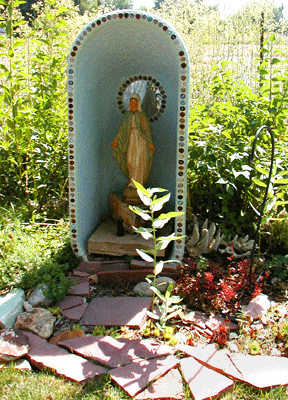
Shrines Too
It occurred to me that everything I wrote about sacred springs and pools could also apply to shrines, so I went looking via google to find some inspirational shrine pictures for you all. They come from a variety of religions and range in age from ancient to modern.
Enjoy!


Magic Pools and Sacred Springs II
I got to thinking maybe I should show how I run this stuff instead of just commenting on it. Now I usually randomly determine an alignment/affiliation for the site. Given that Garnia is located on a plane that emanates good, I slightly weight the results towards good. This also depends on the location in question, obviously you aren't going to find a Good sacred spring in a temple of Orcus.
Using the new (to me) concept of 1d8 + 1d12 tables-
2- Really Bad
3-4 Bad
5-7 Slightly Bad
8-14 Nothing
15-17 Slightly Good
18-19 Good
20- Awesome!
This assumes that the drinking/bathing character is of the same alignment as the pool or spring, or at least not of an oppositional alignment. For character's of opposing alignments reverse the results so Really Good becomes Really Bad, etc.
Then I move on to a subtable for each result,generally 1d6-
Really Bad
1- Sacrifice: Character is compelled to kill the rest of the party as a sacrifice to the pool, if alone will kill self.
2- Struck Dead: Save vs Death Magic or die!
3- Level Drain: 1 level of experience gone!
4- Stat Loss: Save vs Spells or lose 1d4 Points from your Prime Requisite.
5- Hit Point Loss: Save vs. Death Magic or lose 1d6 HP permanently.
6- Gate Opens: A random extra-planar creature of appropriate alignment to the pool appears to lay the smack down on your ass.
Bad
1- Comatose: Save vs Spells or become comatose for 2d6 days.
2- Change Alignment: The character's Alignment changes to match the pool, Remove Curse to reverse.
3- Disease- Save vs. Spells or be afflicted with a magical disease (Mummy Rot is my favorite)
4- Stat Loss: Save vs. Spells or lose 1d4 points from a randomly determined stat.
5- Damage: Take 1d10 points of damage, Save vs. Spells for half.
6- Curse: As a Cursed Scroll (DMG 121).
Slightly Bad
1- Body Odor: The character's body odor becomes much stronger and very distinctive, for 2d6 days random encounters occur twice as frequently as a result.
2- Body Odor II: For the next 1d6 days the character has Carrion Stench like a Ghast (MM 43).
3- Blindness: As the 3rd level Cleric spell.(PH 46)
4- Disease: As the 3rd level Cleric spell (PH 46)
5- Flatulence!: The next time the character enters battle a Stinking Cloud spell (PH 72) is emitted centered on the character.
6- Mute: Character becomes unable to speak for 1d6 days.
Slightly Good
1- Infravision: Character gains 60' infravision for 1d6 days, if they already have infravision 60' is added to the range.
2- Lucky: The character re-rolls next failed saving throw.
3- Cured: Cures blindness or non-magical disease afflicting character.
4- Blessed: Character is affected by a Bless spell (PH 43) during their next combat.
5- Protected: Character is recipient of Protection from Evil spell (PH 44) during their next combat.
6- Suave: Character makes next reaction roll as if their Charisma were 18.
Good
1- Healthy as a horse: Character gains 1d10 HP until they are lost as damage.
2- Remove Curse: The next time it would be appropriate the character gains the benefits of a Remove Curse spell (PH 47) as if cast by a 12th level Cleric.
3- Disease Immunity: The Next time it would be appropriate the character gains the benefits of a Cure Disease spell (PH 46).
4- Stat Gain: A random stat increases by 1d4 points.
5- Real lucky: Character automatically makes next saving throw.
6- Aware: Character cannot be surprised for the next 1d4 days.
Awesome!
Regardless of die roll alignment changes to match pool.
1- Hale and Hearty: Character gains 1d10 HP to their permanent total.
2- Prime Stat Gain: Character adds 1d4 points to their prime requisite.
3- What's That There?: A random beneficial magic item floats to the surface for the character.
4- Are You Experienced?: Character gains (1d4x100)x level experience points from a religious vision.
5- Infravision II: The character gains 60' infravision permanantly.
6- Proof Against Disease: Character gains disease immunity as a Paladin (PH 22) unless alignment changes.
Magic Pools and Sacred Springs
Remember how back in the day there were always magic pools and stuff in dungeons? Things you needed to take a chance on, a gamble with your character that might end up with you dead, or you might wind up with some awesome addition to an ability score. I also thought it was pretty hard-core that you couldn't remove the water for analysis in any way, just drink and take your chances!
When I moved to a more wilderness based style of play; where even if you found a dungeon it was likely to be a ruined temple's crypts or catacombs beneath a ruined city or the sewage system of a living city, I lost a lot of the old mega-dungeon tropes and the magic pool type thing was also lost. I ditched a lot of the mega-dungeon tropes in search of verisimilitude too.
I have been thinking about this because I have recently been considering the way I randomly add places to an encounter table when I make them for an area. A typical encounter table in my Garnia campaign for, say, a wooded area might have a goblin patrol, a wild boar, a bear, a human warband hunting goblins, an abandoned wood-cutter's hut, a shrine to a random god, change in weather, etc. Some of those will only be encountered once, thereafter treated as no result. The shrine gets me thinking about those pools, particularly in Garnia with it's Celtic veneer, because pools and springs were often sacred sites to the Celts.
I have to admit I was also inspired by my recent rediscovery of my Talisman game. In Talisman there are several waters that give different, although fixed, effects; one each for Life, Strength and Craft. Of course those are only good for a fixed number of points each too, which differs from most D&D magic pools as I recall.
The Romans even took advantage of the sacred significance and reputed healing powers of Celtic sacred pools, most notably at Aquae Solis (Bath, England); mind you they were pretty fond of baths to start with. Since I already have non-recurring sacred sites popping up in my random encounters in the form of shrines, I figure maybe it might be a good idea to bring back the pools and springs.
Anyway, for some inspirational viewing, a variety of sacred springs and pools from around the world; some ruined, some still in everyday use; both in natural settings and worked by the hands of man.


Tuesday, March 22, 2011
Steppe Stuff
Alexis over at Tao of D&D posted about food and had this picture of kumiss-
 I have had kumiss and it's not bad, Matt S. (Steppe Warrior ID: Sengum) made some for the first Steppe Warrior gathering back in December of 1997.
 I have had kumiss and it's not bad, Matt S. (Steppe Warrior ID: Sengum) made some for the first Steppe Warrior gathering back in December of 1997.
Anyway, that inspired me to look for some more images of Mongol stuff to put up for a lazy post today. I am a little under the weather and not particularly interested in doing any deep thinking and philosophizing.
 My wife has made buuz; it's pretty good, particularly if you like lamb or mutton.
 My wife has made buuz; it's pretty good, particularly if you like lamb or mutton.
The next image is of a ger in Mongolia. They are also known as yurts. My internet/Steppe Warrior alter ego lives in one.
 I have seen some in real life, at SCA events.
 I have seen some in real life, at SCA events.
This is a typical yurt interior.
 They don't seem to live too bad for nomads, eh?
 They don't seem to live too bad for nomads, eh?
Monday, March 21, 2011
Today's Mail Post Equinox Edition
I love me some Ebay! Once again all photos are from Ebay, because the camera on my wife's cell phone sucks.
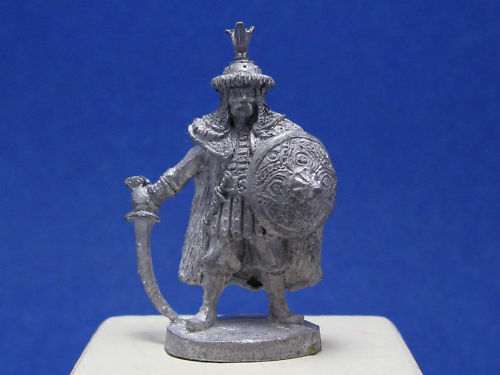
This guy I used to have and somehow lost, he was my Jagatai mini I kept next to my monitor for inspiration.

I never had this Basic book, despite it being the one that "worked" with the Expert book.
 The expert book could have been in better shape, and I'll probably keep looking for a better one, but the price was good. My original copy was a casualty of me going to college and my mom deciding to "clean my room"*.

This is one of the Gazetteer series I didn't have back in the day, surprising since I dig Mongols so much. Plus I thought it might give me inspiration for some Steppe Warrior adventures!
Happy spring time everyone!
*As near as I can tell, that's a euphemism for throw away everything you think you can possibly get away with without it being missed.
Literacy in D&D

The presumption of literacy in D&D has always been something that kind of bothered me. Assuming that all characters are literate breaks the willing suspension of disbelief in the implied quasi-medieval setting. 3rd edition codified that all characters are literate except Barbarians. Earlier editions just kind of assumed it, as evidenced by the presence of magic scrolls usable by anyone or magic tomes for every class*. I always went the other way in my campaigns, including my 3e ones, and assumed everyone was illiterate unless they had a good reason to be literate. Clerics and Magic-Users got a pass, I just reasoned that the level of education required for those classes also required literacy. This may be a little hypocritical on my part because I generally ruled that if you could do it in real life then your character could do it too, like with swimming.
Anyway, if you want your Fighter to be literate give me a reason. Maybe your Fighter was the son of a scribe or a librarian. Mostly I let the secondary skills table define your character's pre-adventuring past, but I am always open to working with a player that has a reasonable character background in mind**. I like a little bit of background for characters, it gives me something to build off of. If you do roll "no skill of measurable worth" I am willing to assume that you are a second generation member of your character class OR a younger son of a minor noble*** farmed out to an apprenticeship with your class mentor.
*I am willing to hand wave magic scrolls and tomes for Fighters and Thieves based on the fact that they are magic items. Maybe the scroll just has to be unfurled and displayed for the spell to take effect, or the magic in the scroll causes the words to usher forth from the character's mouth. Perhaps the tome just burns the knowledge it is attempting to impart into your head as you look through the pictures in the book. Plus Thieves eventually learn to decipher all manner of languages as a class skill.
**Reasonable should obviously avoid being ridiculously clichéd or uber-power-gamer-ey. I will die happy if I never meet another player whose character's family was wiped out by ANYTHING, I mean for god's sake don't any adventurers choose the life for any other reason than childhood trauma? Also princes and demigods and other super special or supernatural backgrounds can NOT show up again too. Whatever happened to wanting to be an adventurer because it sounded more exciting than plowing fields all day?
***Keeping in mind that nobles don't really get much of an education themselves in the middle ages, they keep literate people around mostly to do the stuff that requires literacy. They train in weapons and small unit tactics and estate management.
Subscribe to:
Posts (Atom)